
How Do Birds Survive Harsh Winters?
January 24, 2026
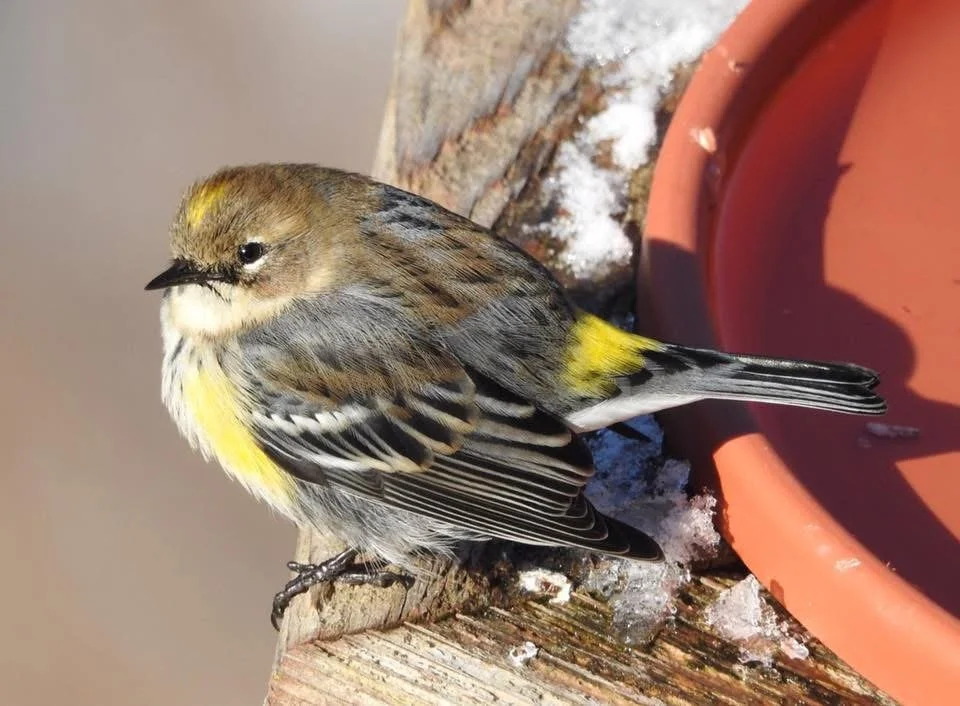
Yellow-rumped Warbler by Melanie Furr
Have you ever stopped to marvel, during the coldest, iciest, gloomiest days of winter, how birds survive? As Atlanta braces for a winter storm and I replenish the bird feeders and plug in the heated bird bath, I find myself marveling, again, how such small creatures, warm-blooded like ourselves, get by in such wretched weather. Surviving the elements any day of the year is pretty astonishing, really, given the demands of finding and/or catching enough food every single day, often while avoiding and evading predators and thermoregulating through temperature extremes. While, of course, different bird species, and even individual birds, have their own unique ways of surviving harsh winters, they have two overarching strategies: to migrate (aka, “get the heck out of Dodge”) or to overwinter in place (aka, “tough it out”).
Migration is a fascinating phenomenon that still leaves science puzzling at the incredible physical and navigational feats of flight that birds accomplish. Depending on the species, birds may migrate just a few hundred miles or traverse the globe. Birds that migrate away from colder latitudes are following their primary food sources, often flying insects or nectar, which are unavailable or in short supply in winter, especially in places where the air, water, and ground freezes.
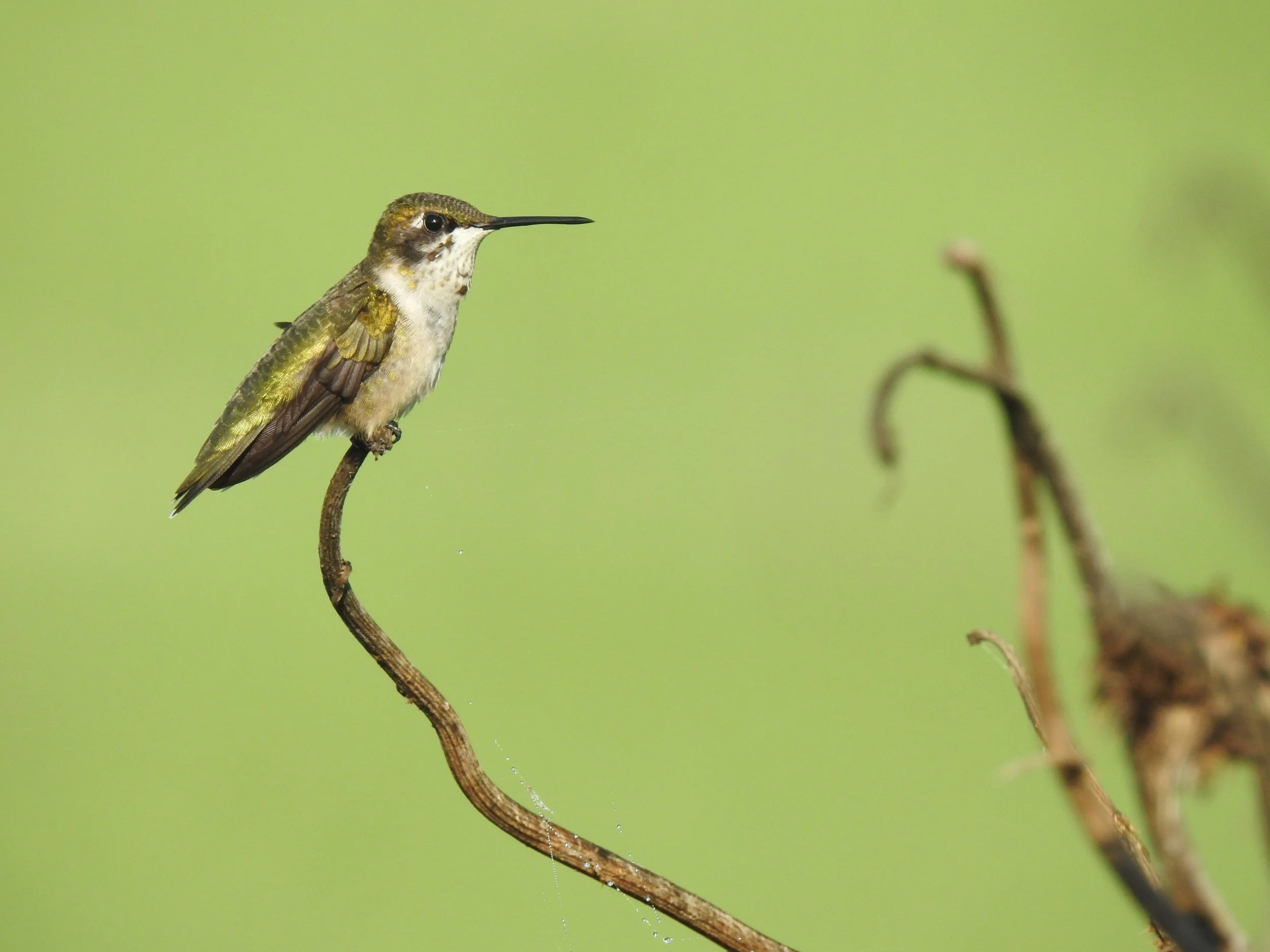
Ruby-throated Hummingbirds migrate to tropical zones where nectar and flying insects are available.
While spending the winter in warmer climes may sound appealing, birds that migrate face tremendous perils, including loss of stopover or wintering habitat, collisions, light pollution, storms, and more. By some estimations, as many as fifty percent of the birds that migrate out of North America each fall fail to survive and return for the following breeding season. When neotropical migrants like hummingbirds and catbirds return to your yard this spring, be thankful that they have beaten the odds stacked against them.
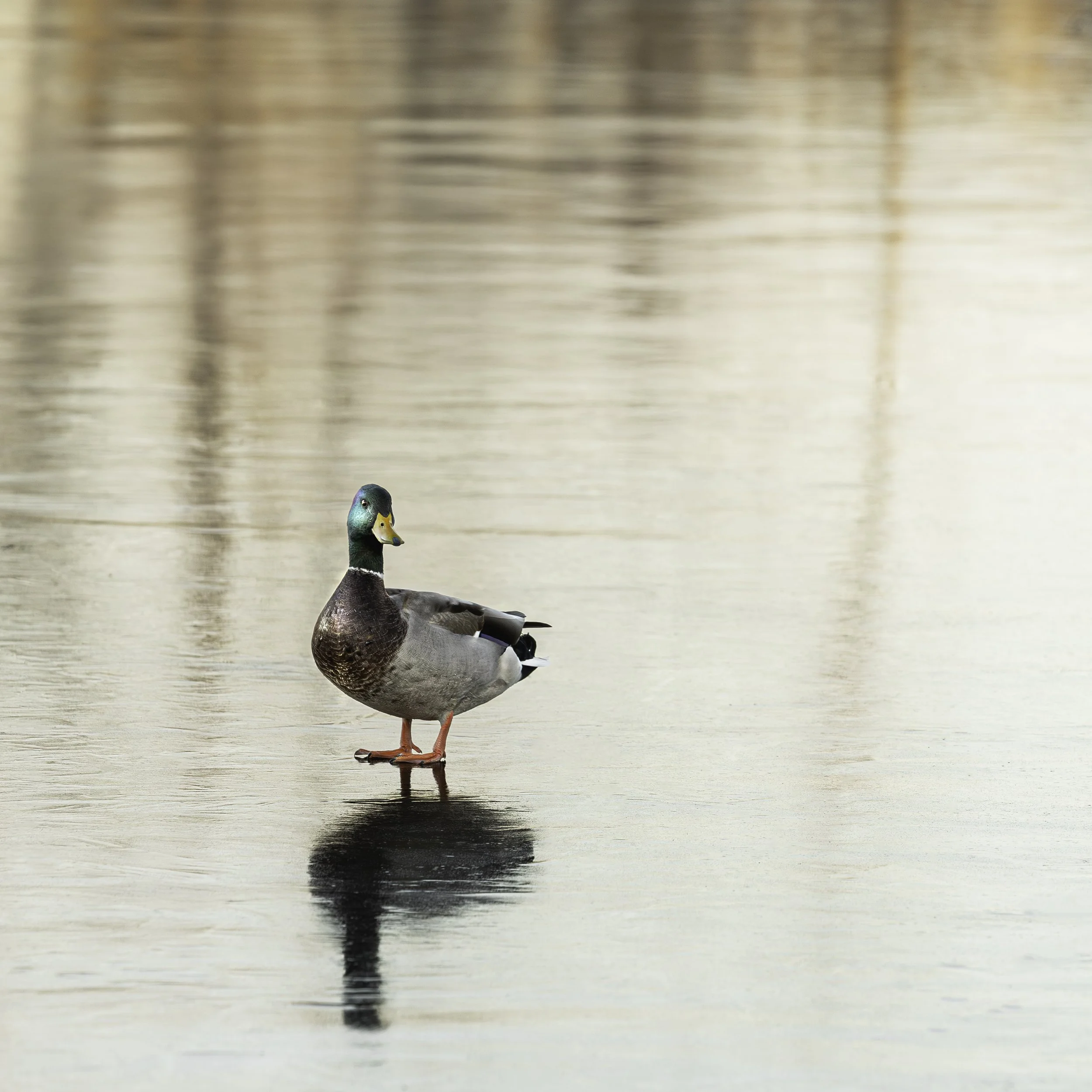
Mallard on Ice by Dana Brooks, friend and photographer extraordinaire
Birds that winter in place face their own perils--harsh weather, lack of food, exposure to predators—and have evolved a number of incredible adaptations to survive, both physiological and behavioral. Many species molt into a duller plumage, which is less energetically costly to produce and provides better camouflage in the drab winter landscape. In some species, internal organs may grow or shrink, as needed. A chickadee’s brain, for example, grows up to thirty percent in winter to help it remember the locations of hundreds of cached seeds, while conversely, its sexual organs shrink. Ducks, geese, and a number of other birds keep feet and toes functional by having cooler venous blood in direct contact with warm arterial blood. Behavioral adaptations include putting on an insulating layer of fat, making use of tree cavities or nest boxes for shelter (sometimes huddled with other birds), caching food (storing for later), and joining a flock (more eyes is a good thing for finding food and spotting predators).
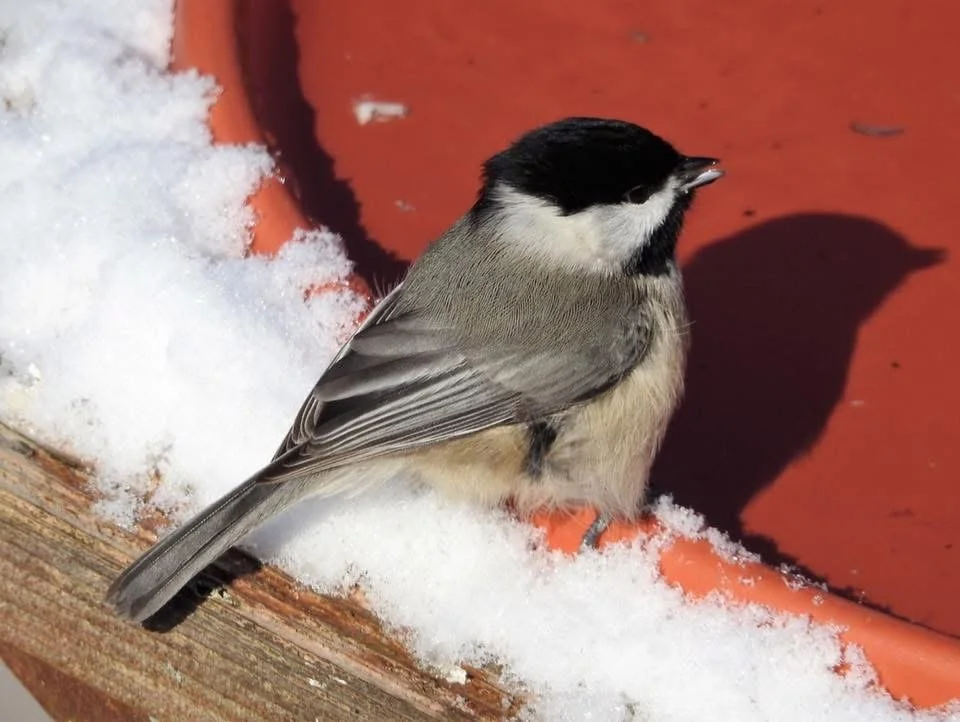
A chickadee’s brain can grow up to thirty percent in winter to help it remember the locations of hundreds of cached seeds. Photo by Melanie Furr
Although birds have incredible adaptations to survive in winter, we can take simple steps to make their lives a little easier. Planting native plants is one of the best ways to help birds year-round. Unlike introduced species, locally evolved plants support the life cycles of our local insects. Even when plant life seems dormant, insects in various life stages are hidden away for birds to find. Locally evolved plants that produce berries, nuts, and seeds offer additional food resources for birds in winter. (Beware of commonly used ornamentals like Nandina, or Heavenly Bamboo, which actually produces red berries that are toxic to birds.) Dried vegetation, leaf litter, brush piles, and tree snags provide invaluable resources in the form of food and shelter for birds and other wildlife, so leave your yard “untidy.” Nest boxes provide additional winter roosting sites, and well-maintained bird baths and feeders can add to our enjoyment of our winter birds.
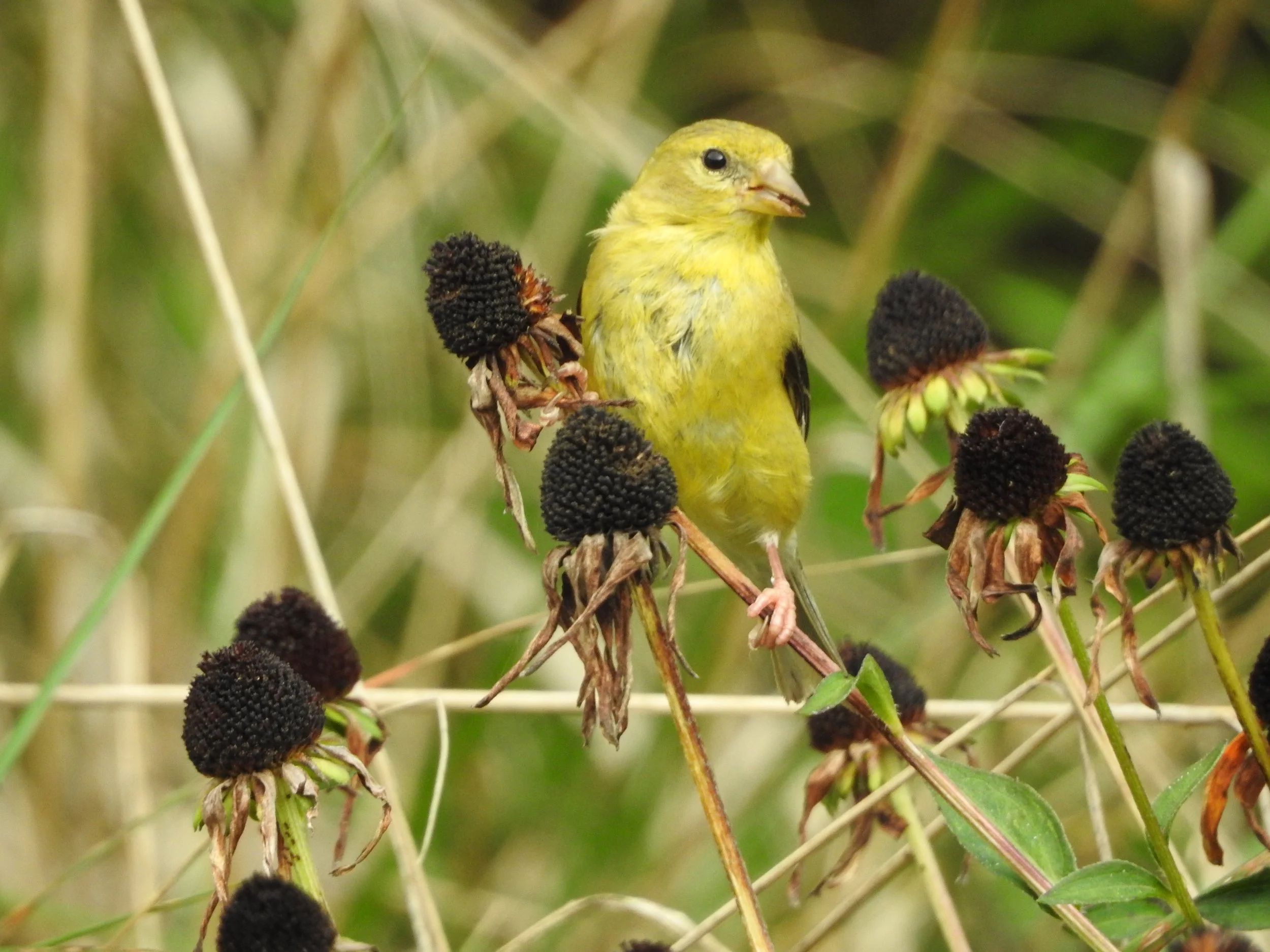
An “untidy” yard, especially with native plants, can be a boon for birds in winter. This American Goldfinch is enjoying seeds of native coneflowers.
Take a moment to appreciate how birds survive both natural and manmade perils while finding enough food to survive on a daily basis, especially in winter. Let’s do our part to make their lives a little easier!
