
Wheeling through Wheeler
This January I hosted my inaugural Feathers with Furr birding tour, a three-night trip to Decatur, Alabama to explore Wheeler National Wildlife Refuge and other local birding hotspots. The tour included full days of birding in different habitats with a dash of local history and culture. Given my 10-years working with the Shepherd Center, making the tour inclusive for two birders (now friends) with different access needs was especially meaningful. In spite of cold temperatures, I couldn’t have asked for a more fun and easygoing group, and the birds did not disappoint.
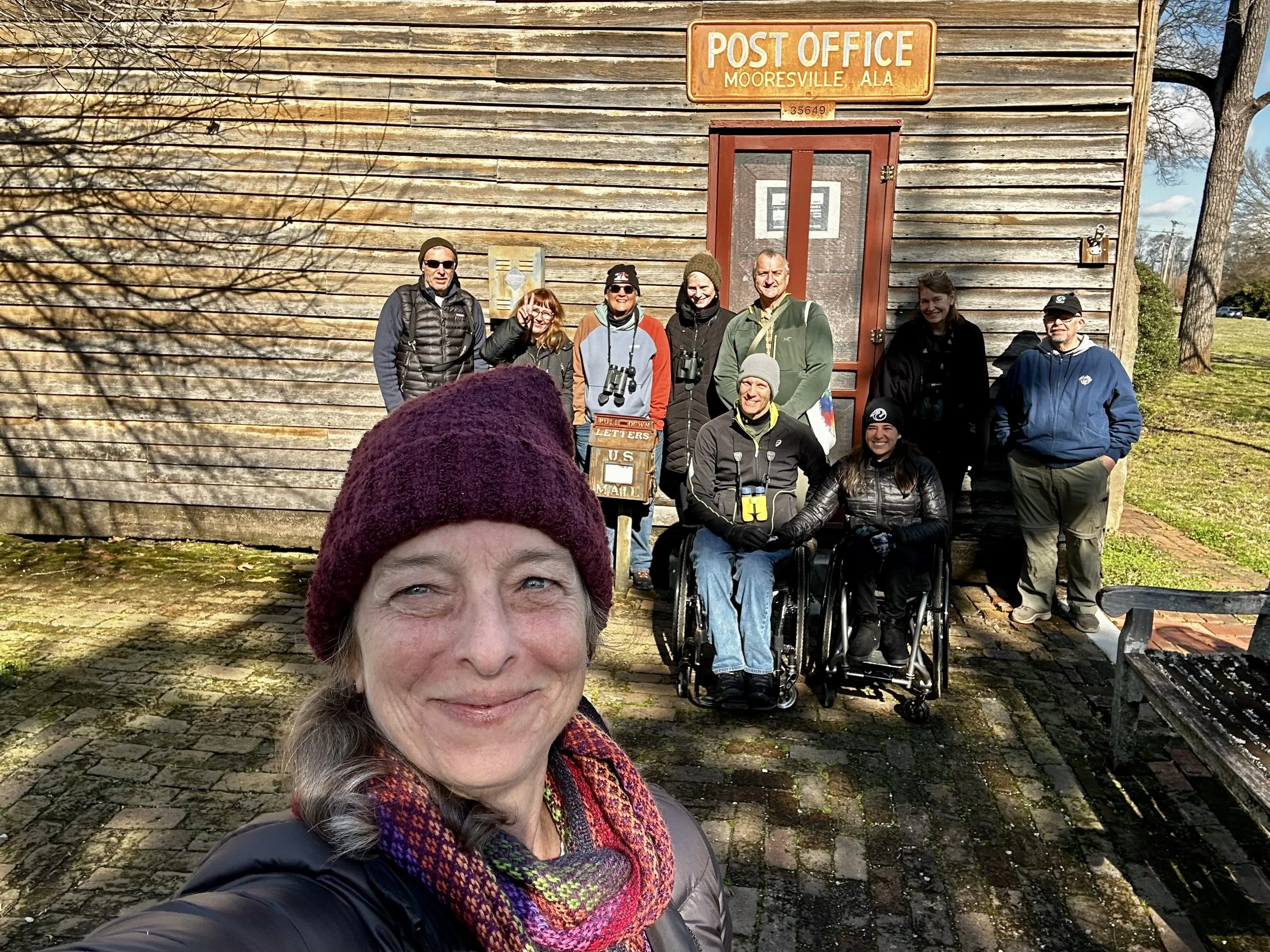
The group made a quick stop in the historic village of Mooretown, which has one of the oldest operating post offices in the nation. I couldn’t have asked for a nicer group for my first birding tour as Feathers with Furr!
If you’ve never been to Wheeler NWR in winter, put it on your bucket list! Established as wintering habitat for migratory waterfowl, Wheeler hosts up to 20,000 Sandhill Cranes and abundant waterfowl each winter, as well as a small group of endangered Whooping Cranes. The tour started at the Visitor Center, where one participant spotted the Whooping Cranes among the thousands of Sandhills right away (phew!). During a chilly sunrise visit to the refuge, we saw thousands of cranes flying into the fields in the spectacular foggy dawn. Flocks of Greater White-fronted Geese and White-Pelicans added to the spectacle, along with murmurations of Red-winged Blackbirds. Later in the day, we were awed by a flock of 400-500 Snow Geese and took our time at each stop to study and appreciate the many species of ducks.
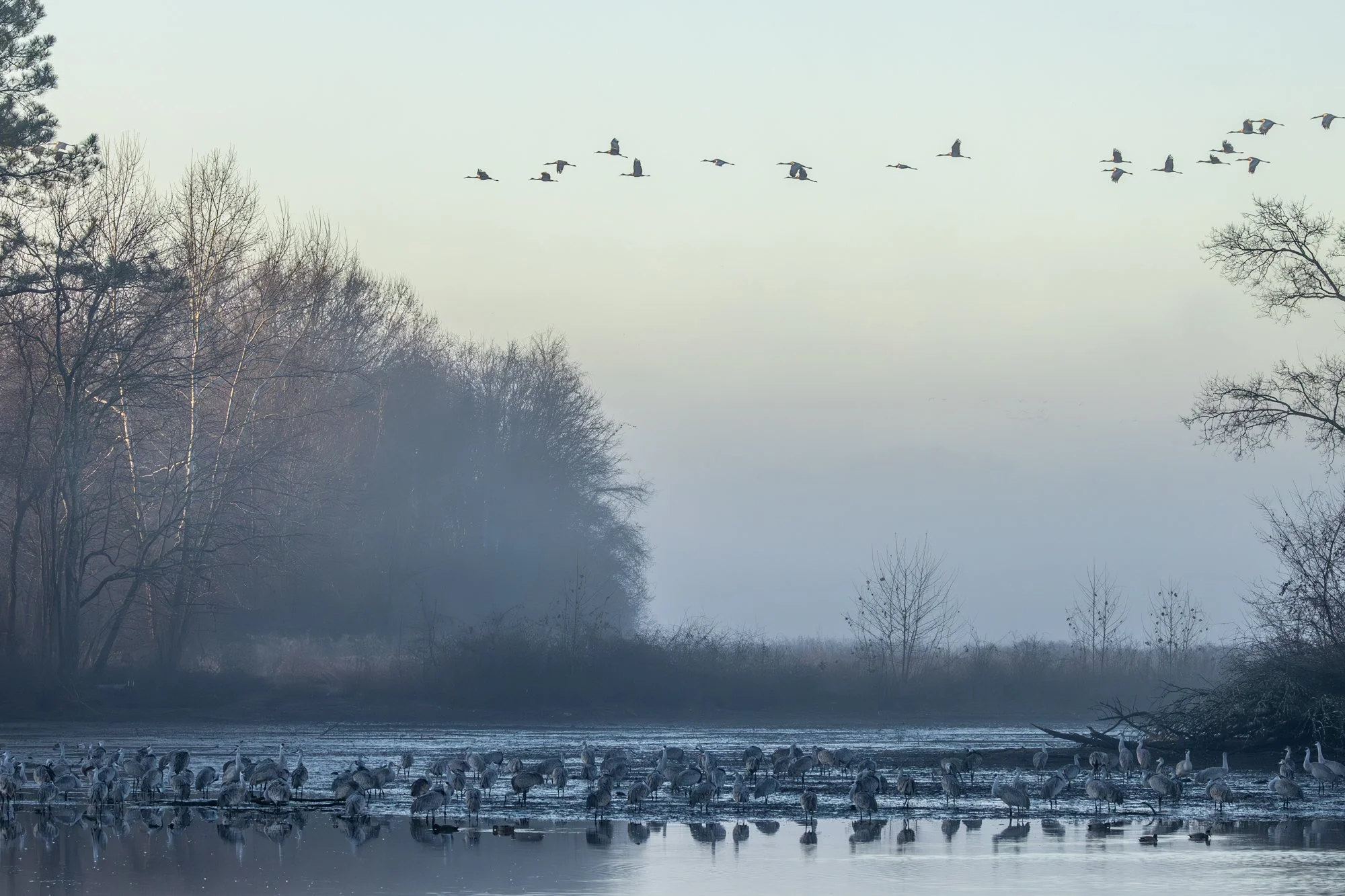
Sandhill Cranes on an icy, foggy morning at sunrise; Photo by Andy Renner
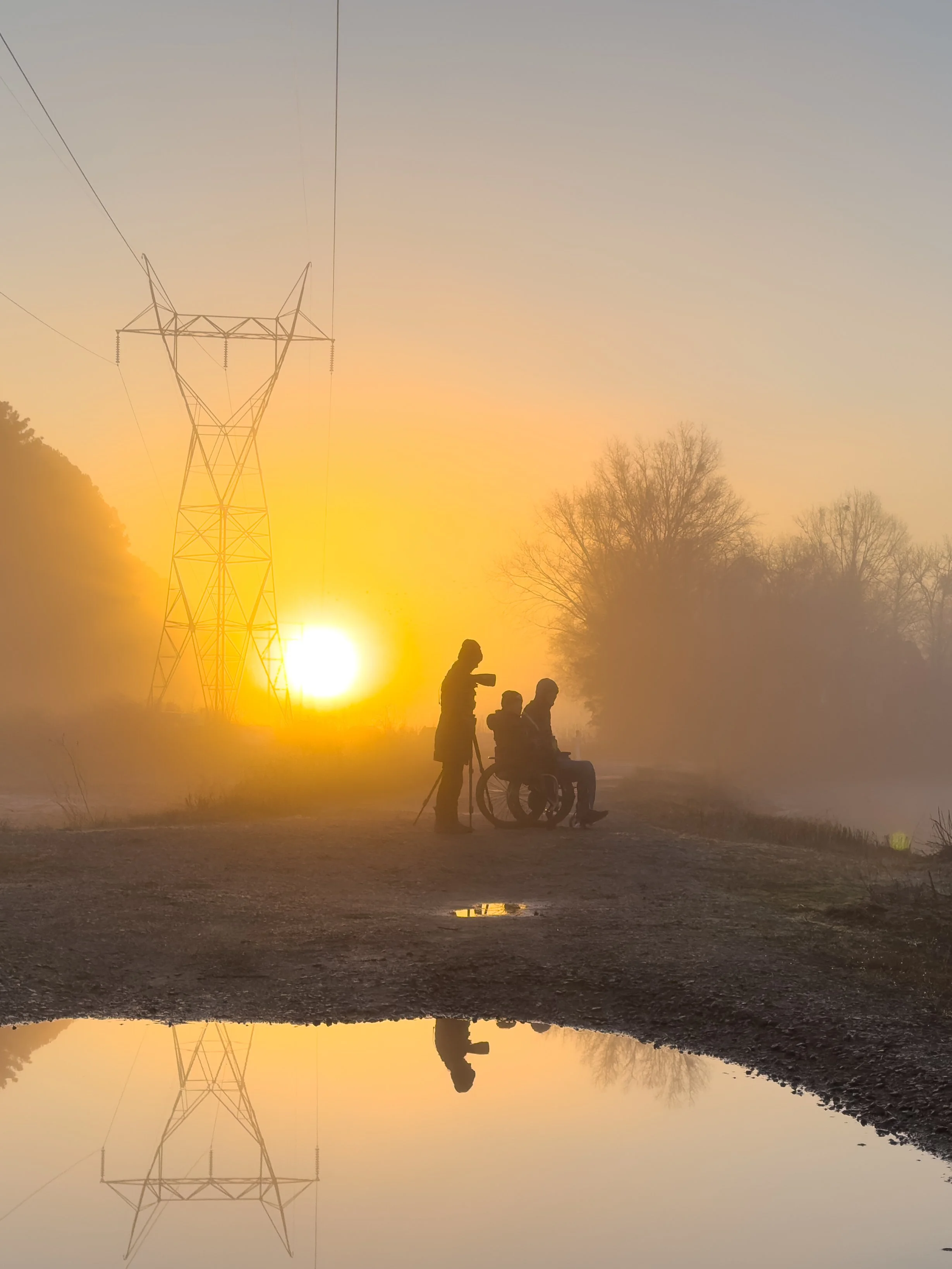
Up with the sun to see the cranes; Photo by Andy Renner
At Wheeler Dam, we had incredible looks at Common Loons and White Pelicans, and we tested our spotting skills picking out a lone Black-Crowned Night Heron roosting among hundreds of Double-Crested Cormorants. Watching a barge pass through one of the locks was an added bonus. At Swan Creek WMA, we were treated to a sighting of a Bald Eagle refurbishing a nest and found a variety of shorebirds including Least Sandpipers and Dunlin. On the final morning, we focused on finding a variety of grassland species, including Northern Harrier, American Kestrel, Horned Lark, and Eastern Meadowlark.
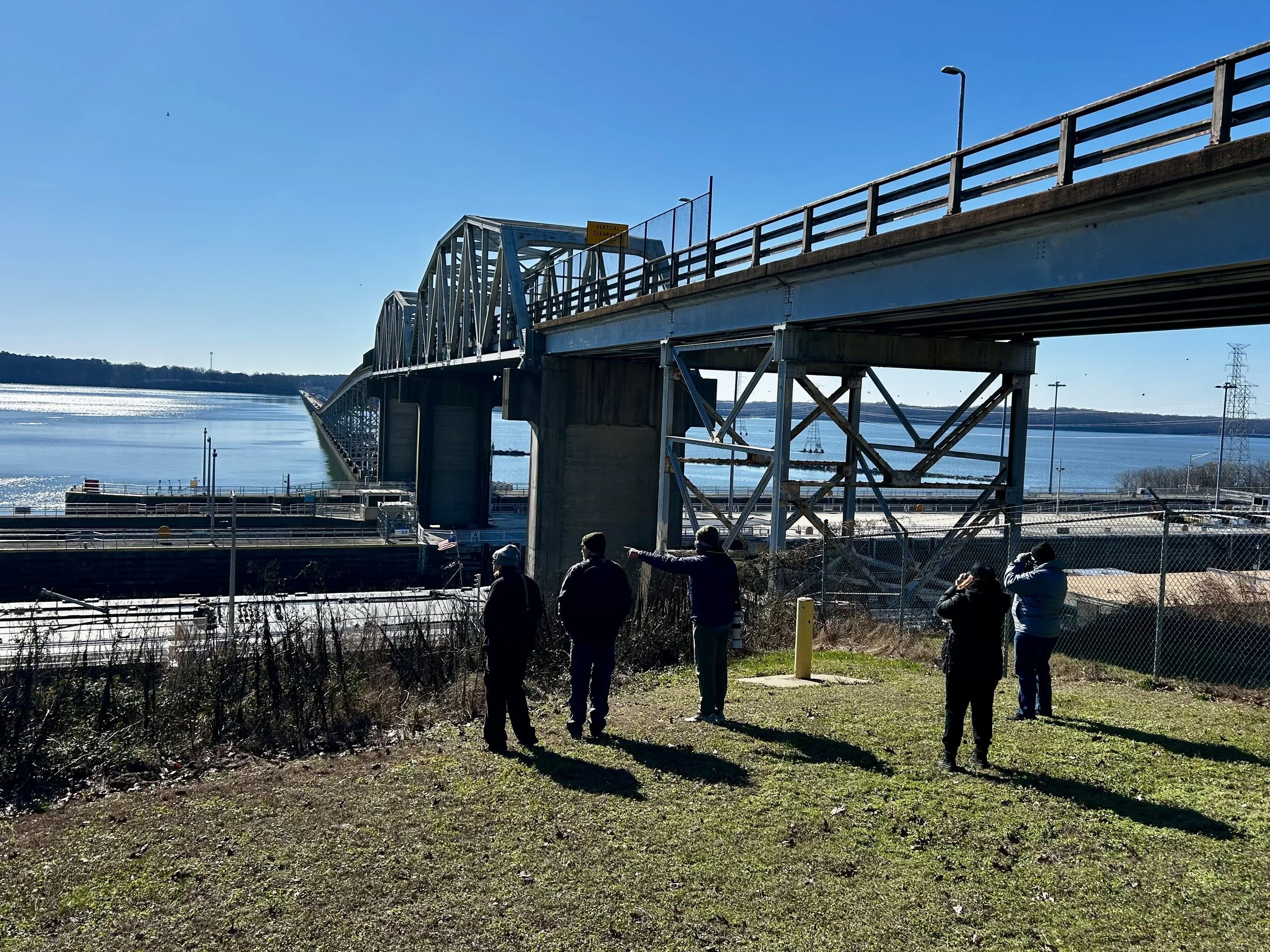
Watching a barge pass through the locks at Wheeler Dam while scanning for gulls, loons, and ducks.
Participant feedback cited the sunrise experience with the cranes as a tour highlight, and people liked learning a bit the local history about the Decatur area and the Tennessee Valley Authority, which I brushed up on before the trip. The whole group agreed that our experience was enriched by having two participants who use wheelchairs as part of the group. Although very few of our stops would be considered accessible by ADA standards, Maggie and Brad (who stay active with camping and mountain biking) tackled the terrain without complaint. I hope to fine-tune future the itinerary in the future to address other accessibility needs and offer tours that are inclusive to all.
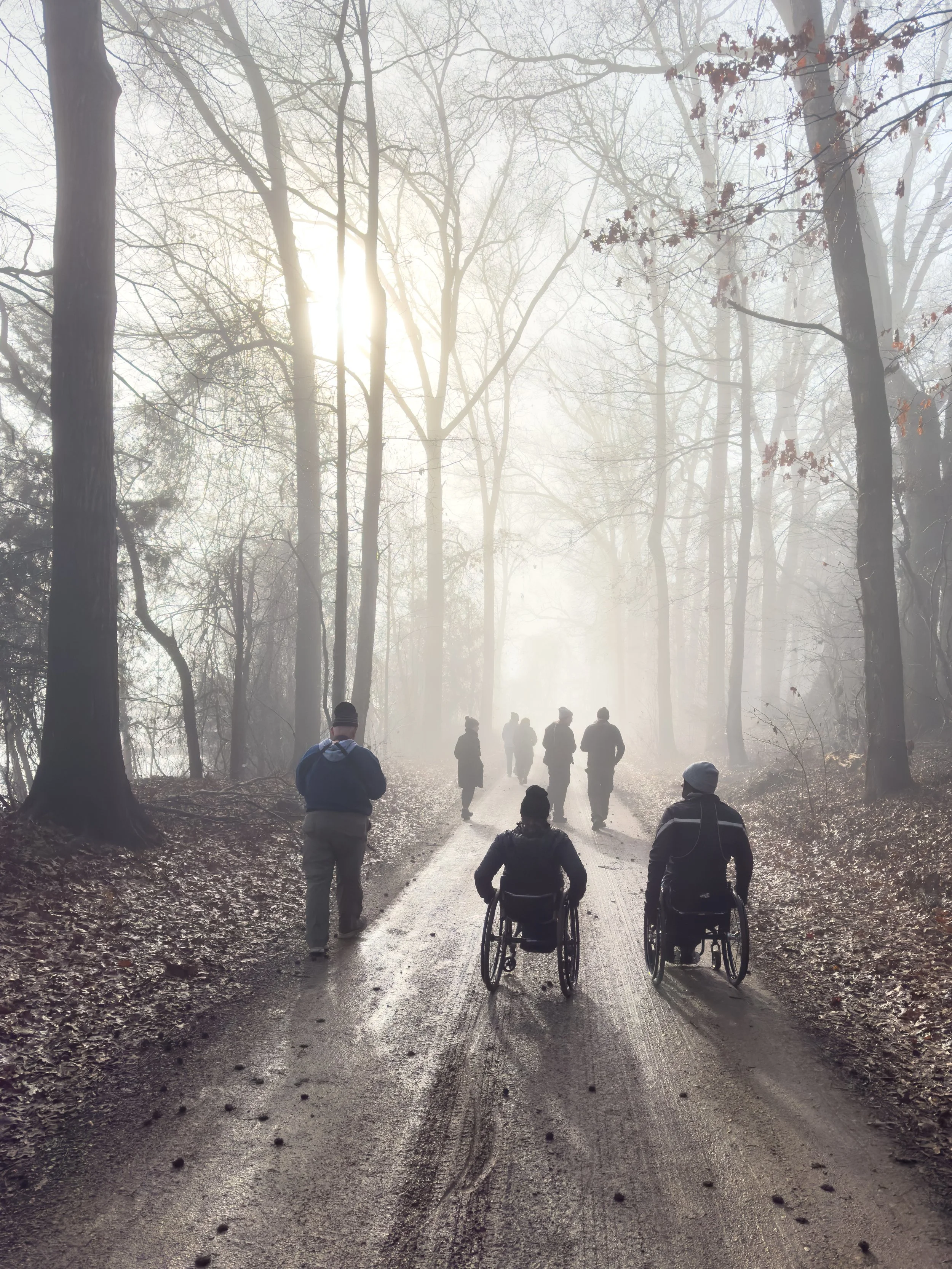
Wheeling through Wheeler; Photo by Andy Renner
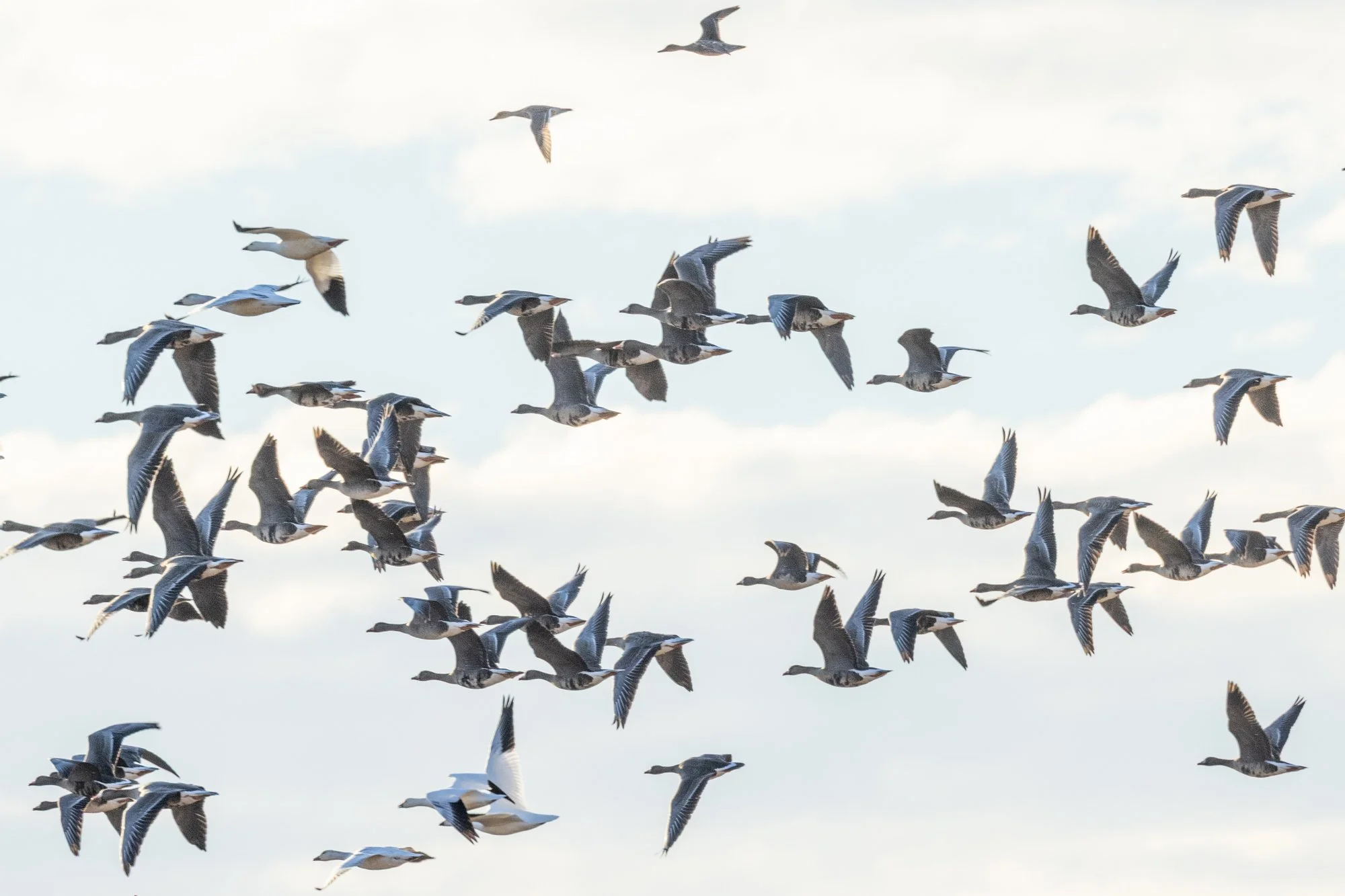
Geese in flight; Photo by Andy Renner
