
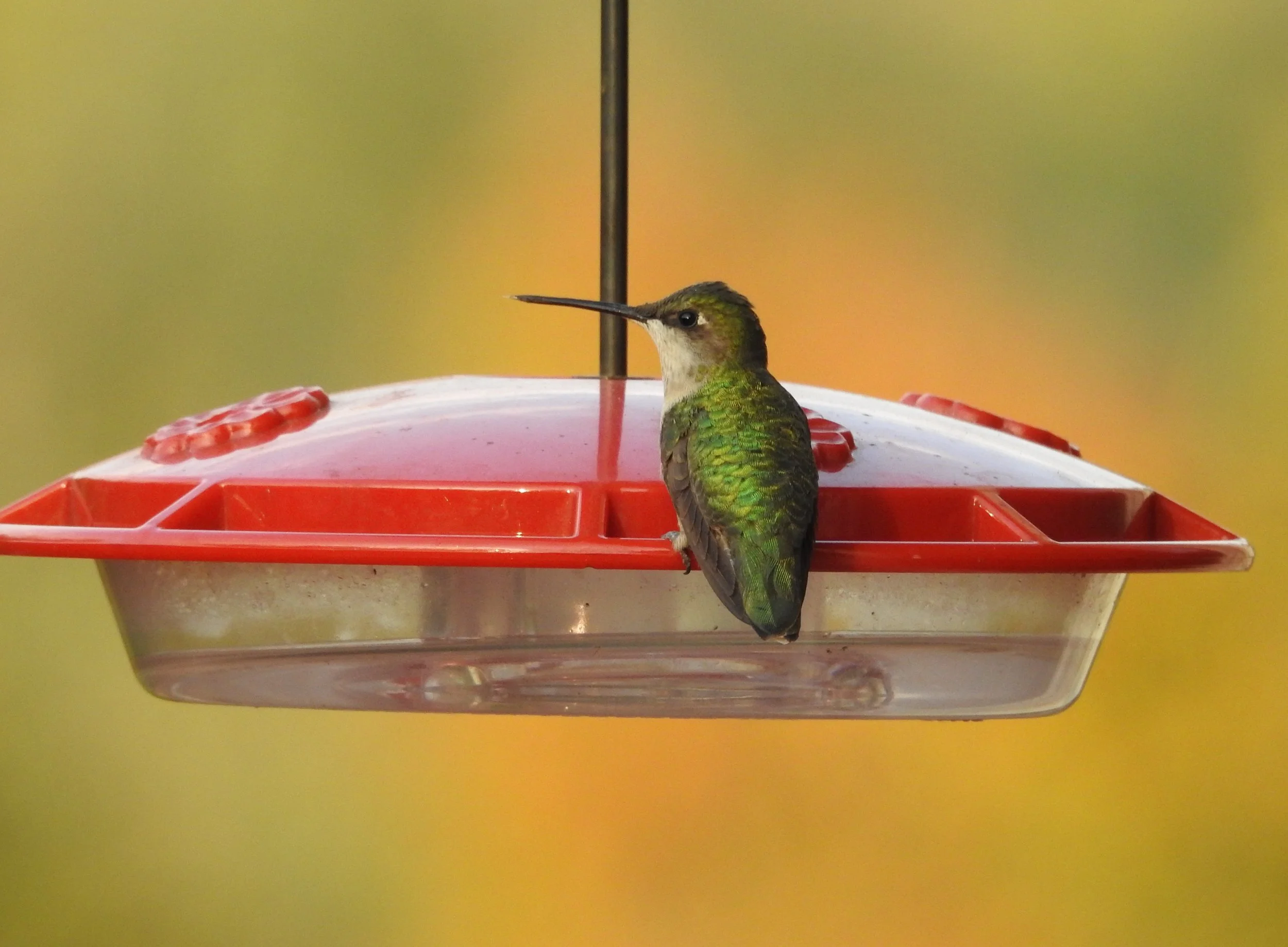
November Visitor by Melanie Furr
Many bird lovers eagerly await the annual arrival of Ruby-throated Hummingbirds each spring, and few of us are ready to see them leave again in the fall. (Is anyone?!) Sadly, they’ll soon be gone from the all but the southeastern-most parts of the United States. But don’t take your feeders down just yet!
Like many species of migratory birds in the northern hemisphere, Ruby-throated Hummingbirds spend the winter in the tropics. Male ruby-throats, who play no role in raising offspring, are the first to leave, most departing from their breeding grounds across eastern North America by the end of August. Females, who may have lingering parental duties, depart later, and their chicks are the last to leave, navigating to their wintering grounds with nothing but an internal compass, passed down through millions of years. Although a few may linger in Florida and the most southern parts of Georgia and the gulf states, most will be completely gone by the end of October.
But leave those feeders up! Ruby-throated Hummingbirds have been reported across Georgia well into November (like the bird pictured above who visited my feeder several days during Thanksgiving week one year), and contrary to popular myth, leaving your feeder up will not delay their migration. Several western hummingbird species, including Rufous, Allen’s, Black-chinned, and Calliope, are reported annually in Georgia each winter, and ruby-throats are wintering on our coast more regularly as well. Keeping your feeder up well into fall, as long as it’s clean and the nectar is fresh, may reward you with a winter visitor.
Ruby-throated Hummingbirds typically migrate during the day, approximately 25 miles per day, stopping in the afternoon to rest and refuel for the next leg. In the eastern part of their range, when they reach the Gulf of Mexico, they make an astonishing nonstop transoceanic flight—at least 500 miles—to reach Central America! To prepare for this incredible flight, these birds will gorge on nectar and nearly double their weight in a matter of weeks. Any stragglers will be grateful for the fuel your feeder provides!
