
Off the Beaten Path in Magical Montana: In the Footsteps of Lewis and Clark
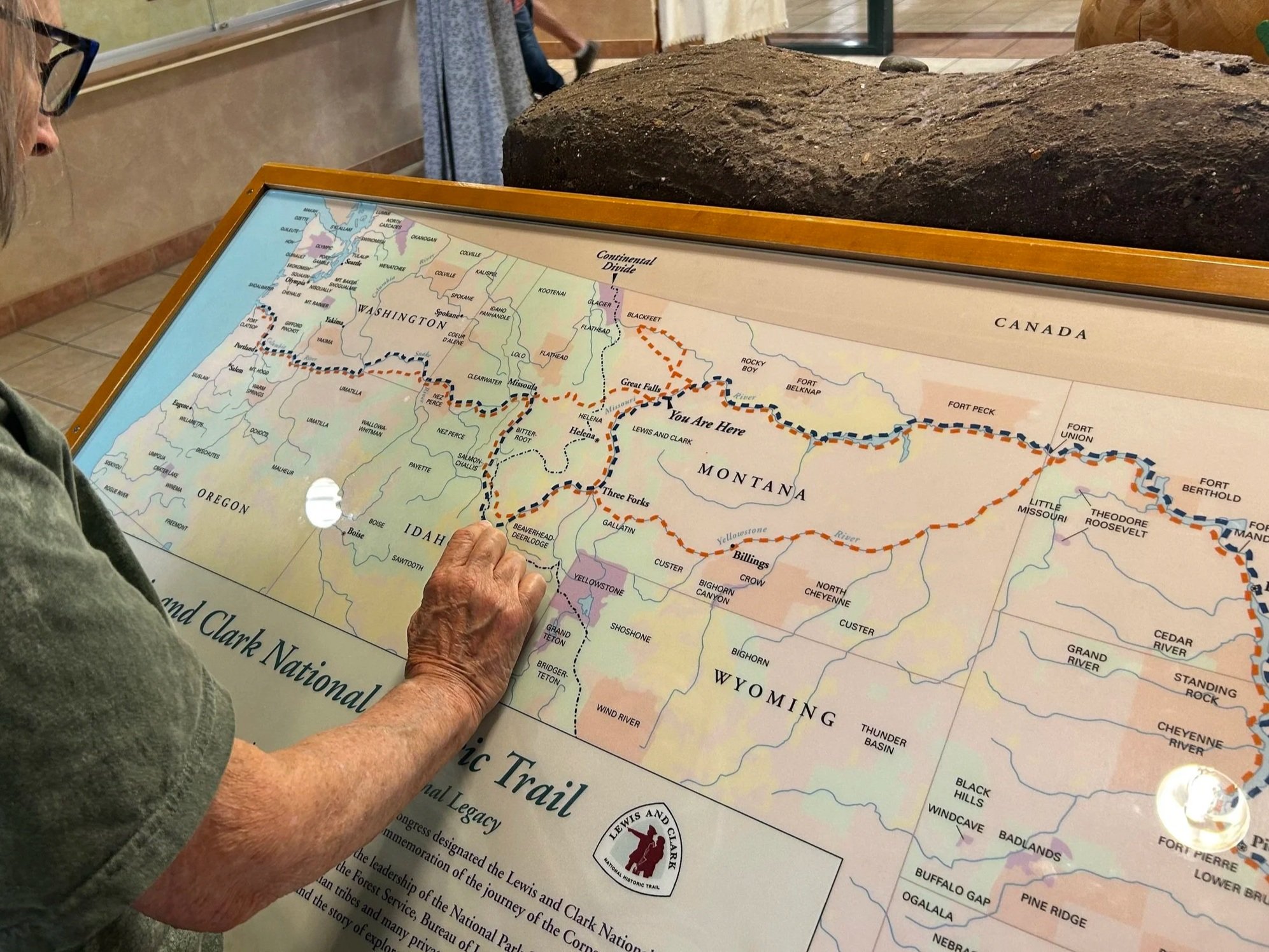
Visiting the Lewis and Clark Interpretive Center in Great Falls, MT
In June, seven enthusiastic birders joined me for my first Off the Beaten Path in Magical Montana tour. From the towering Bitterroot Mountains to the sweeping plains around Great Falls, we tallied 152 bird species while enjoying beautiful landscapes, vibrant wildflowers, and abundant wildlife. Birding highlights for participants included memorable looks at American Dipper, Trumpeter Swan, Lewis’s Woodpecker, Upland Sandpipers (with chicks!), and Burrowing and Short-Eared Owls, to name a few, but we were also excited to encounter bison, black bears, elk, badger, bighorn sheep, prairie dogs, and even a prairie rattlesnake.
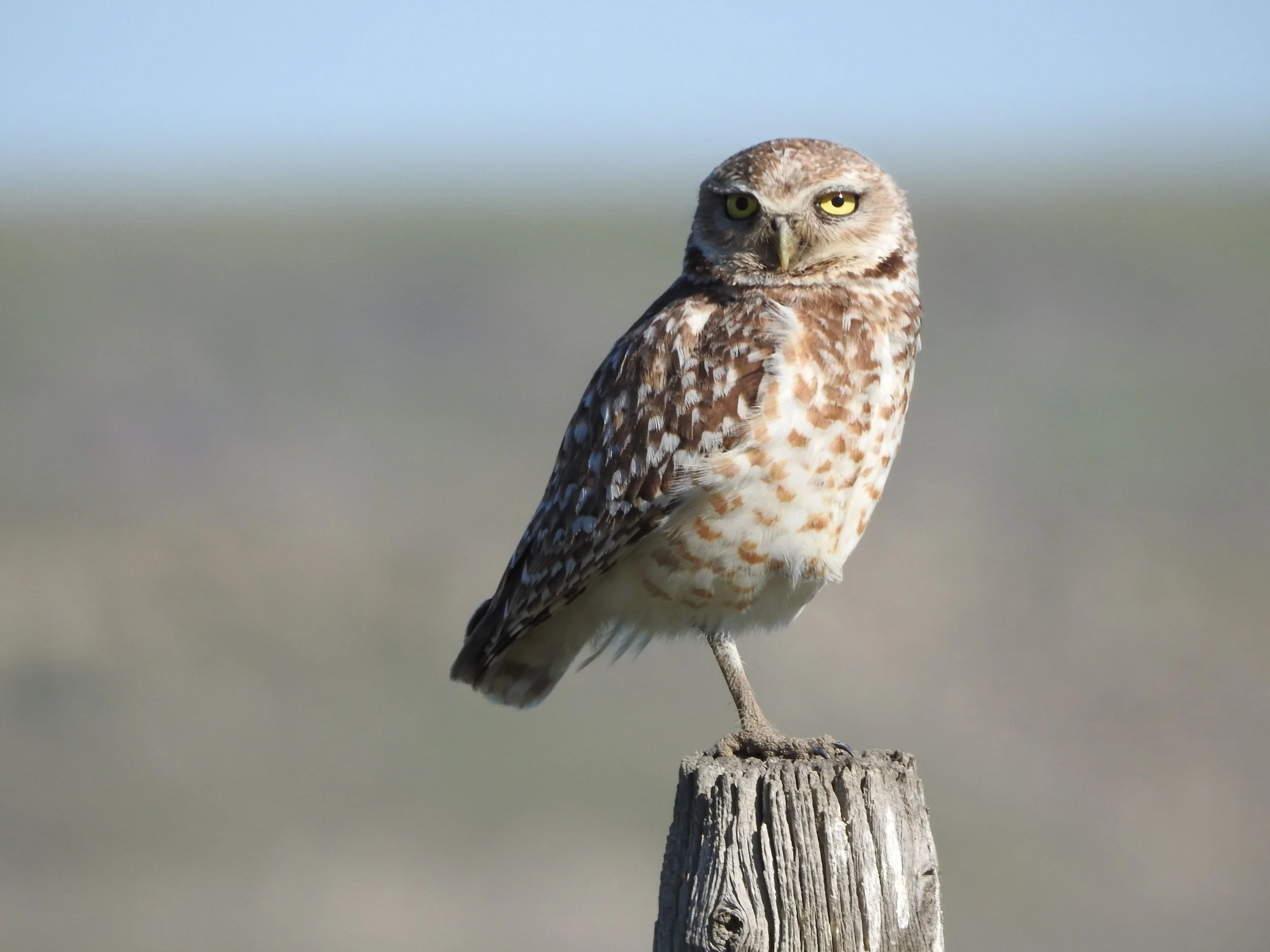
Burrowing Owl by Melanie Furr
While I didn’t plan the tour with the idea of incorporating the history of Lewis and Clark and the Corps of Discovery, I realized after reading Stephen Ambrose’s Undaunted Courage this spring that the tour route would overlay with several places that Lewis and Clark mentioned in their journals during their quest to reach the Pacific Ocean, places inhabited by indigenous Americans for thousands of years before European settlers set foot in them. The tour itinerary presented a unique opportunity not only to incorporate a bit of American history, but also for participants to consider what it would be like to travel across, or live in, these often harsh and unforgiving places without modern transportation and conveniences.
Listening to the calls of Western Tanagers and Red Crossbills, we had a picnic lunch in Traveler’s Rest, where the Corps of Discovery camped before a Shoshone guide helped them with their arduous climb over the Bitterroot Mountains. Today, travelers can reach the mountain pass they crossed, Lolo Pass, by a winding two-lane highway, and our group enjoyed birding around Lolo Pass Visitor Center, tallying lifer Chestnut-backed Chickadees and Townsend’s Warblers for many. We spotted Mountain Bluebirds and Lincoln’s Sparrows at nearby Packer Meadows, where the expedition camped and rested before making their descent, and watched Spotted Sandpipers on the banks of Colt Killed Creek, where the men were compelled to sacrifice a horse because game was scarce and they were desperately cold and hungry.
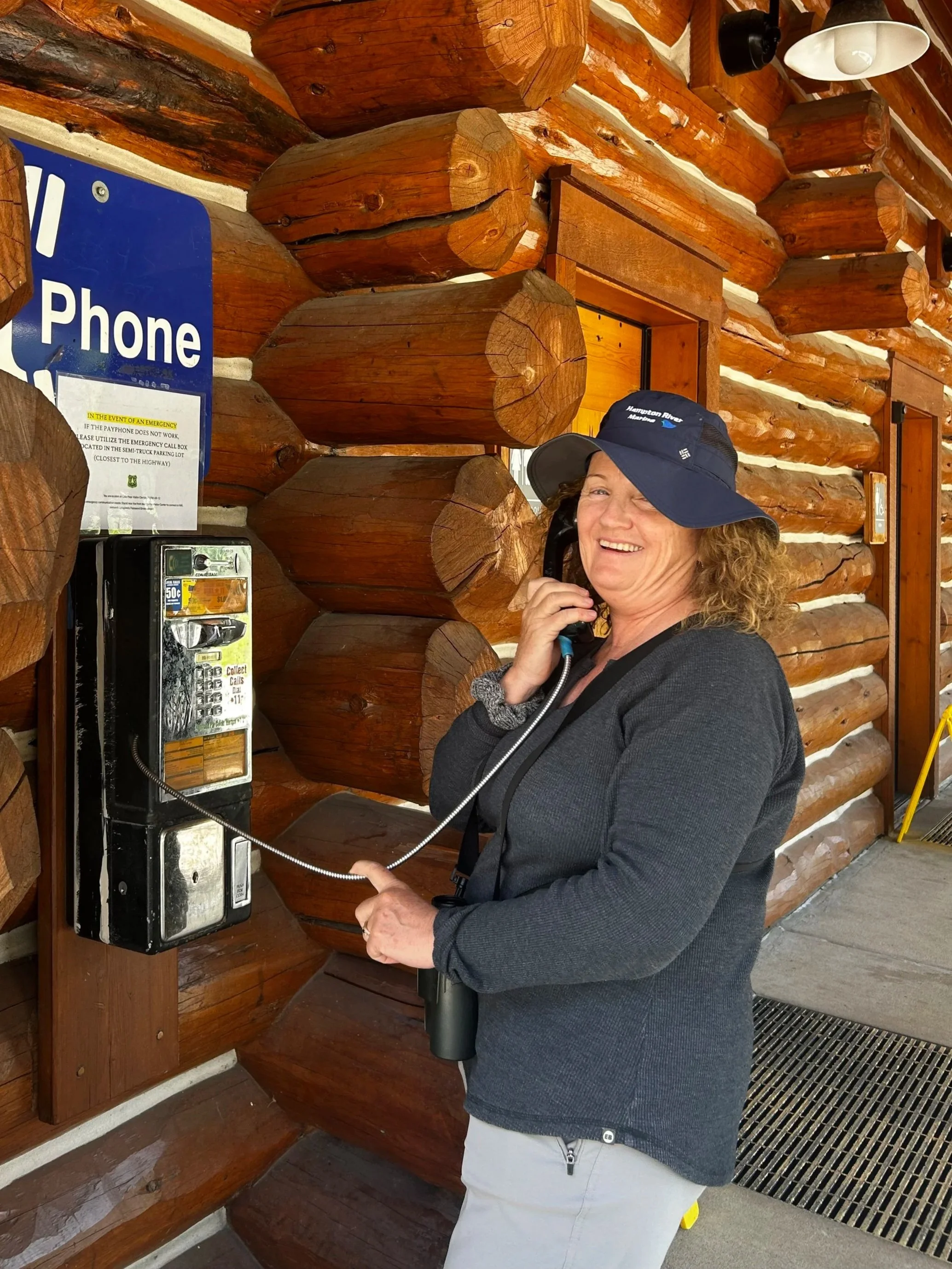
Lolo Pass still doesn’t have good cell service, but an old-fashioned pay phone is available.
In Great Falls, we got to experience only a hint of what the “Great Falls” of the Missouri would have looked like to indigenous Americans and early white settlers, as today hydroelectric dams dot the nation’s longest river. But it was easy enough to imagine the Herculean effort it would have taken the Corp of Discovery to portage their boats and thousands of pounds of supplies up ten miles of river with five waterfalls (the tallest 87 feet) and an elevation gain of 612 feet. Gulls and cormorants don’t seem to mind the change in the landscape, and shorebirds, geese, ducks, loons, and swans still grace the waters.
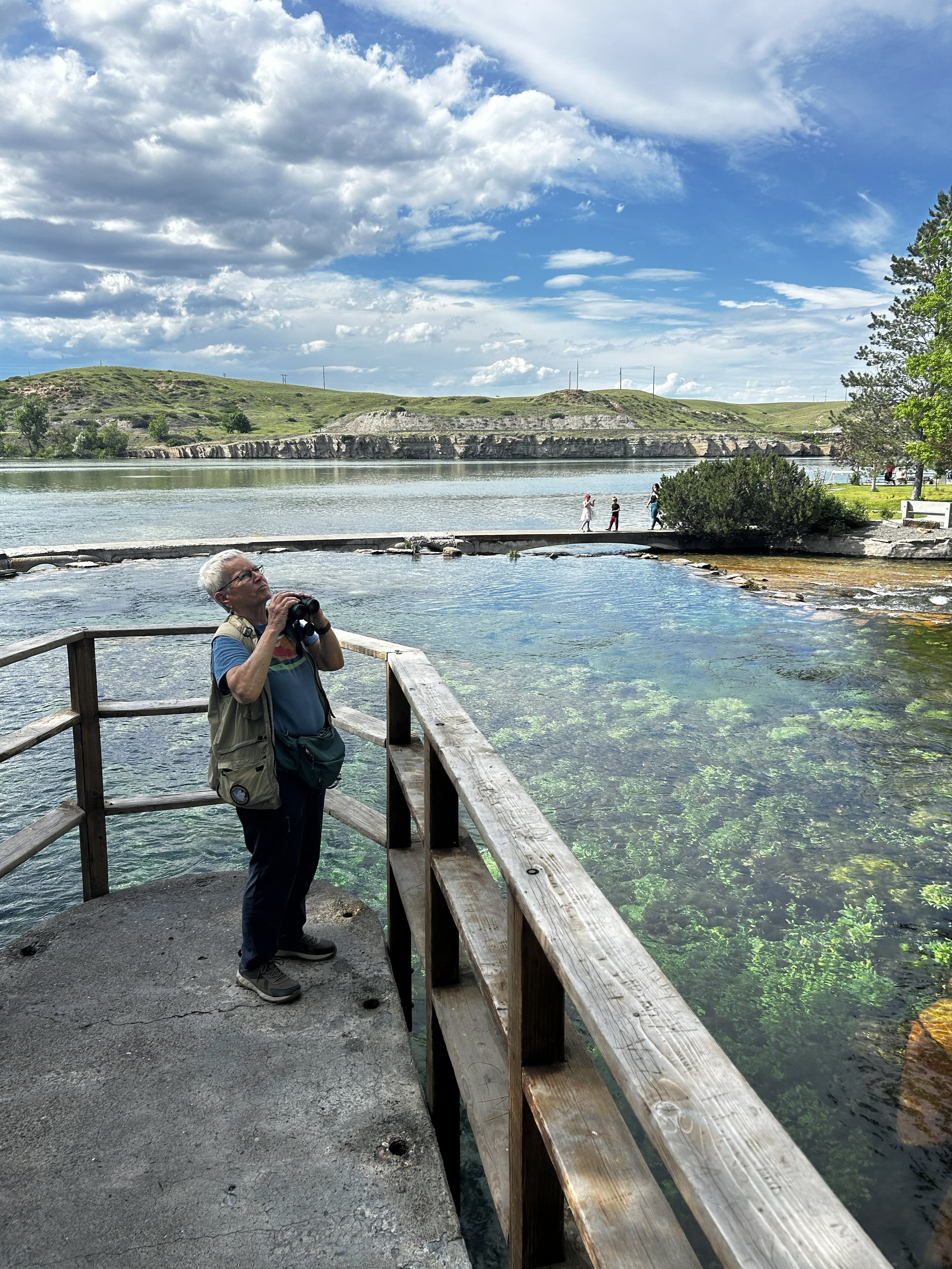
Birding along the Missouri River in Great Falls
In the sweeping plains and “kettles” (wetlands) surrounding Great Falls, we saw displaying Long-billed Curlews and Chestnut-collared Longspurs, twirling Wilson’s Phalaropes, and skulking Sharp-tailed Grouse. Bustling prairie dog colonies meant good habitat for Burrowing Owls (and prey for badgers), and we had good looks at all of these. (Watch your step for prickly pear! Apparently, this was a scourge to Lewis and Clark while they were crossing the plains, though they otherwise appreciated the abundant game available there.) All the participants particularly enjoyed our visit to First People’s Buffalo State Jump Park, a butte where for hundreds of centuries before white settlers arrived, Indigenous peoples stampeded buffalo over the mile-long cliff in great hunts.
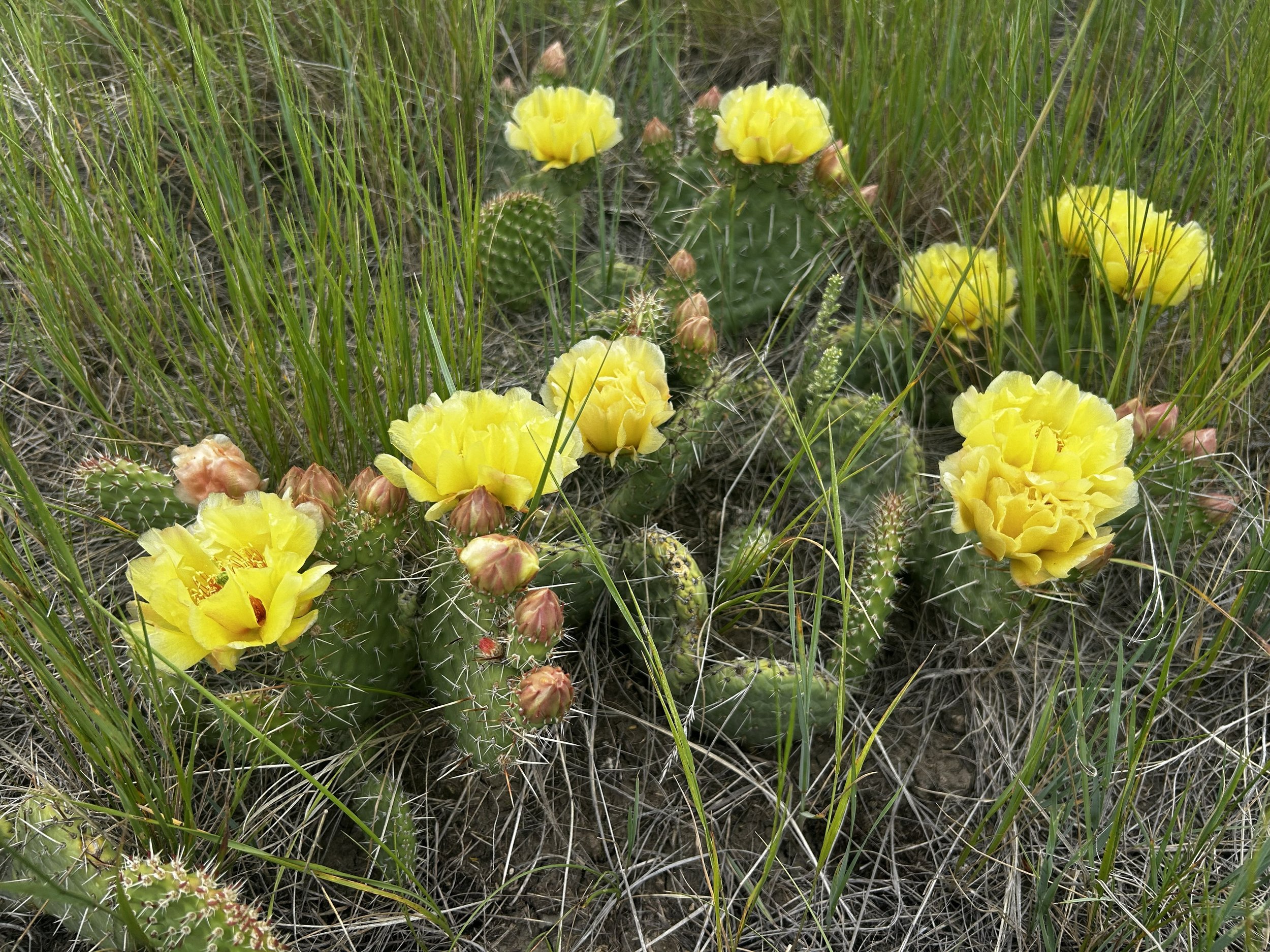
The blooming prickly pear was gorgeous, but I wouldn’t want to walk across a field of it!
Although I planned the trip to Montana for the amazing bird life amid spectacular landscapes, intentionally selecting off-the-beaten-path sites without crowds and foot traffic, visiting places first described in English by Lewis and Clark—and the homelands of indigenous Americans for thousands of years before white settlers arrived—added another element of wonder to the trip. I look forward to offering this tour again and diving deeper into the connections between history and our birding locations.
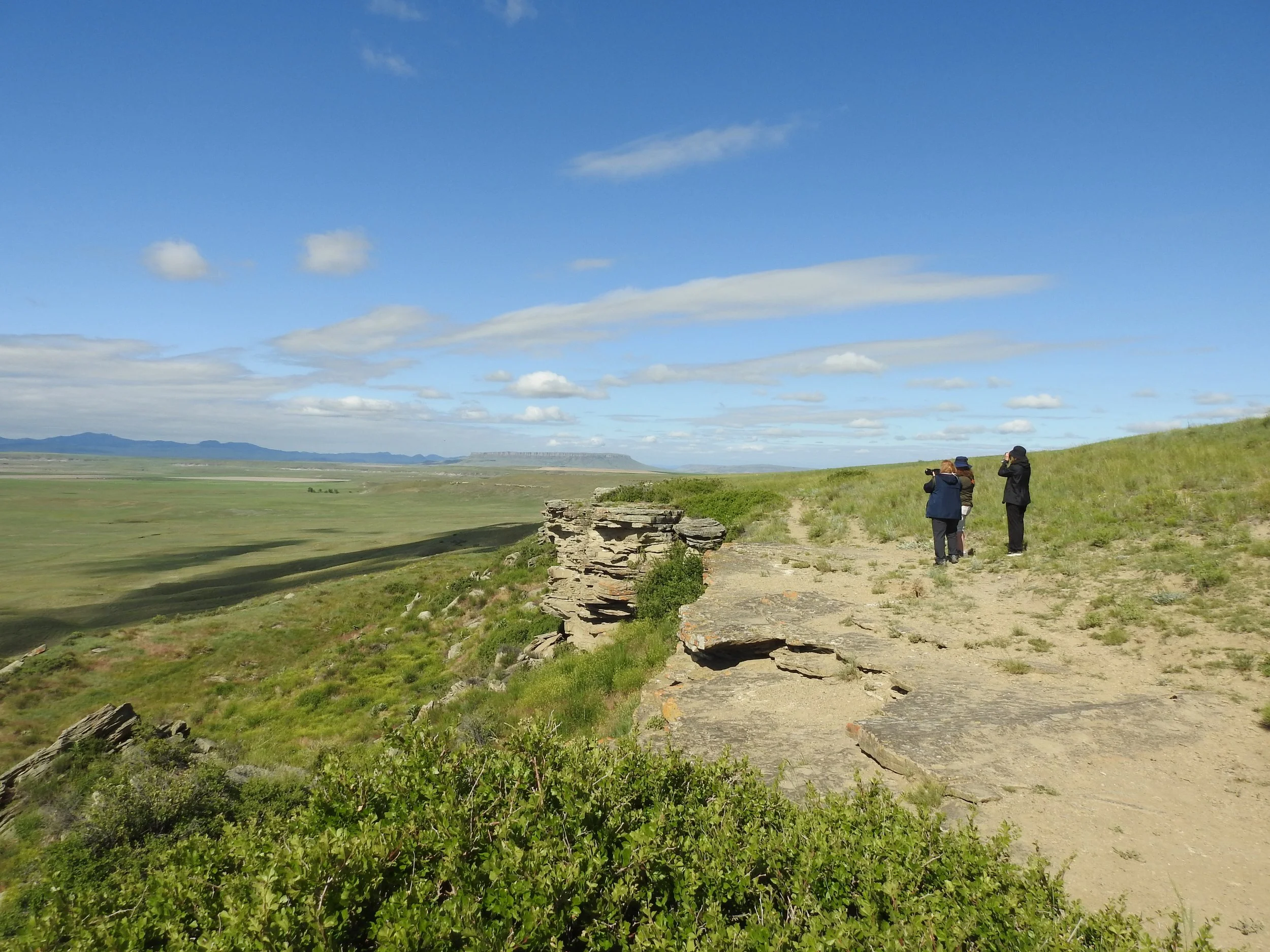
Looking out toward the Rocky Mountain front from the top of Buffalo Jump State Park
